How Chatbase launched a series of customer stories on X

Chatbase is the complete platform for building & deploying AI support agents.

What Chatbase launched

Yasser ElsaidApr 27, 2026

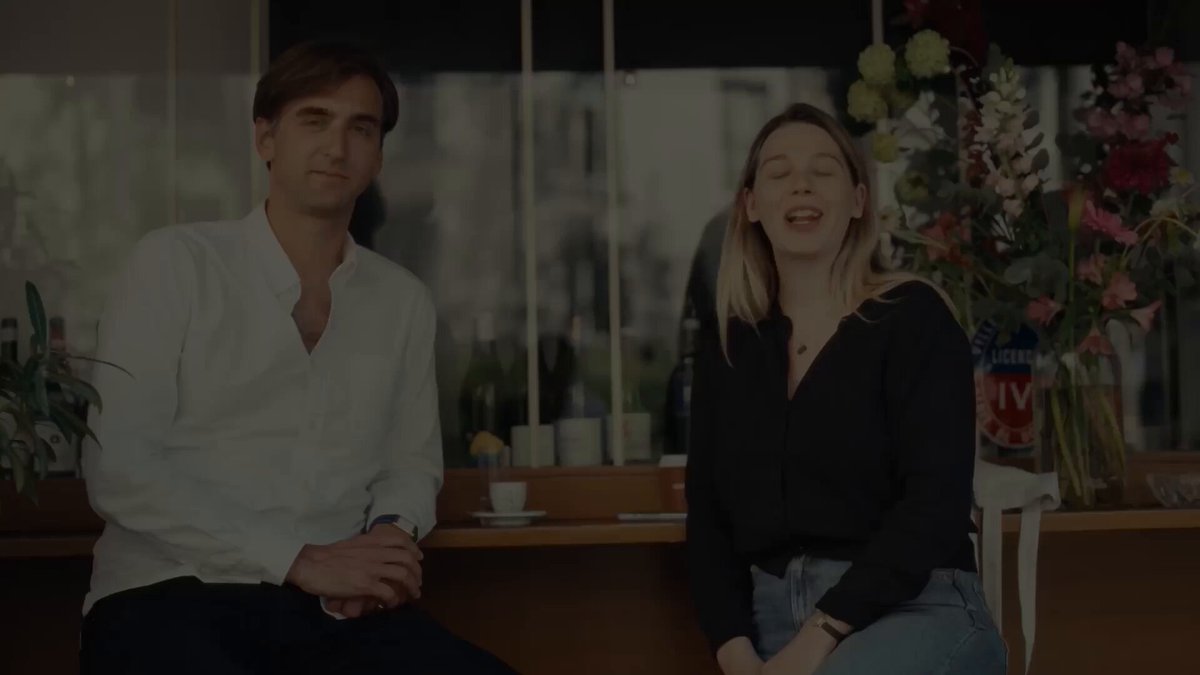
We are launching a new series where we sit down with @Chatbase customers from around the world and share their stories. First episode with @kschlenker from @opalapp. Bonjour de Paris 🇫🇷 https://t.co/U3Gfky7KtG
187201516K51

Transcript

  1. 0:00Hello everyone, Sandra from ChatBaits here. Today we are in lovely Paris interviewing Kenneth from Opel.
  2. 0:14So Kenneth, we are in lovely Paris. Tell us more, did Opel actually started here?
  3. 0:20Opel lives here, but when I got started I was actually in California on the road between Los Angeles and San Francisco.
  4. 0:28I've been working on this kind of early prototype of Opel for a few weeks with Matt, co-founder of Opel.
  5. 0:34And we literally just got it to work. It was January 6th, 2020.
  6. 0:40And I started the company the next day on January 7th.
  7. 0:43And I was around, I believe, Big Sur in California at that time.
  8. 0:47So it was born in California, but it resides in Paris mostly.
  9. 0:53We have a team that's mostly in Paris and now also remote working from all over the world.
  10. 0:59Amazing. Where did the idea come from?
  11. 1:03How did you decide to build Opel? Because you are helping so many people today. Tell us more about that.
  12. 1:09It was a long process. I got started my career at Google.
  13. 1:12I actually started here in Paris and then I moved to New York back in 2008.
  14. 1:16And at the time, what I found at Google was essentially a team and very, very smart people that were all working on building great products.
  15. 1:28But what it meant is really building addictive products, building products that steal people's attention.
  16. 1:33And that took me a very long time actually to realize how the impact that this would have on the world.
  17. 1:40But back in 2012, when I was still at Google, I started writing a business plan for this idea that I had for Opel.
  18. 1:46Because I thought that you basically want to make sure that people can use the technology in a way that benefits them.
  19. 1:56And the problem is that when the products that we use every day are built by companies that make money by stealing your attention,
  20. 2:06what happens is what we see in the world today, which is the fact that most people are connected all the time.
  21. 2:11And there's a global mental health crisis, which we see around the world.
  22. 2:18There's also a productivity crisis where people actually aren't necessarily more productive.
  23. 2:22It can be surprising, but productivity hasn't really changed actually in the last 10 to 20 years in the West.
  24. 2:29People spend more time connected online with great tools, but aren't necessarily productive.
  25. 2:35And why? Because they're distracted.
  26. 2:37And why are they distracted? They're distracted because the tools that they use were not made to protect their attention.
  27. 2:44They were not made to help them focus.
  28. 2:45I feel like you're calling me out, literally.
  29. 2:47But that's such a good point because you do find yourself holding the phone all the time thinking that you are working or doing something where it's just empty time.
  30. 2:56Yeah. I mean, it's by design.
  31. 2:58It's by design.
  32. 2:59The tools are made to make sure that you capture your time and convert it into money.
  33. 3:04That's the attention economy.
  34. 3:06But the reason I started Opal is because I don't think it's a given.
  35. 3:12I don't think its technology has anything bad.
  36. 3:15It's not bad in itself.
  37. 3:16It's great.
  38. 3:17It's wonderful.
  39. 3:18It's just a matter of design.
  40. 3:19It's a design problem.
  41. 3:20We can design it differently.
  42. 3:21We can design it in a way that actually serves people.
  43. 3:26What we're trying to do here at Opal is actually to build a tool that helps people make sure that they can use technology in the right way.
  44. 3:34They can use technology to serve their own well-being, their own progress, their own learning.
  45. 3:40And that's what we do.
  46. 3:42Where do people actually lose so much time?
  47. 3:46Which apps are we talking about?
  48. 3:47I mean, you are a founder.
  49. 3:48I bet you talk with a lot of people.
  50. 3:50You have a bunch of things that you are working on.
  51. 3:52Yeah.
  52. 3:54Where do people lose time, actually?
  53. 3:56Sure.
  54. 3:57I mean, there's a lot of different kinds of problems.
  55. 3:59Time is one thing.
  56. 4:01But really, concretely, what it comes down to is, for example, going to sleep.
  57. 4:08People don't sleep as much as they want and don't sleep as much as is healthy.
  58. 4:15And a lot of that is because they spend too much time on their devices late at night.
  59. 4:18Maybe you notice.
  60. 4:19Maybe some people notice.
  61. 4:20I bet.
  62. 4:22So that could be scrolling TikTok in bed before resting, keeping your phone out next to you at night.
  63. 4:32That's one problem.
  64. 4:33Another problem is at work.
  65. 4:35You're working on something on your computer, maybe, and then you have your phone nearby.
  66. 4:39And the pool is very easy to pick up your phone the moment you're bored, the moment you're stressed.
  67. 4:45The moment the first notification comes in.
  68. 4:47The moment the first notification comes in to go and open Instagram, open TikTok, open Reddit, X, whatever it is.
  69. 4:55And so the thing is that creates a lot of frustration for people.
  70. 5:04The moment that you catch yourself and you're like, oh, I just wasted 15 minutes and now I have to work 15 minutes longer maybe to catch up.
  71. 5:11Or the next day that you haven't slept enough because you stayed up too late.
  72. 5:15You feel bad about that.
  73. 5:17And so what we want to do is we want to change that and make sure that actually people can live happier lives with their tech.
  74. 5:26It doesn't mean cutting out completely social media, cutting out completely news, cutting out completely all these things.
  75. 5:35These things are great if used well at the right time.
  76. 5:39That's correct.
  77. 5:40And I just wanted to say, it's very difficult in today's digital age to just cut everything from your life.
  78. 5:45Because you are getting the source of the information is actually coming from that phone.
  79. 5:48I don't see many people reading the newspapers.
  80. 5:51So how do you actually approach that or balance that?
  81. 5:54What do you tell to people?
  82. 5:55We are not cutting that social media moment you already have.
  83. 5:59But what's the message?
  84. 6:01I think here's an important word.
  85. 6:02It's balance.
  86. 6:03So it's all about balance.
  87. 6:05I think it's kind of similar to food in a way where there's good food that's good for you.
  88. 6:11There's food that's not so good for you.
  89. 6:13And everything in moderation.
  90. 6:15It's fine to have an ice cream.
  91. 6:17No problem.
  92. 6:18But maybe if you eat 10 ice creams in a row for an entire week, you're not going to feel great by the end of the week.
  93. 6:24And so I think we're at this time where a little bit like nutrition and diet.
  94. 6:31Now most people in the world know what is good, what is bad.
  95. 6:35And most people in the world have some sense of what's good and what's bad for me.
  96. 6:38I think we're at this point where people are starting to realize it's the same for technology.
  97. 6:44It's the same for digital nutrition in a way.
  98. 6:47Some things are good.
  99. 6:48Some things are not so good.
  100. 6:50Some things are bad.
  101. 6:51Some things are good for me.
  102. 6:53Maybe not for you.
  103. 6:54Some things are good for a 40-year-old.
  104. 6:57But maybe not for an 11-year-old.
  105. 7:01And also there's the time and place, right?
  106. 7:03Some things are okay at 2 p.m. on Monday, but not at 3 a.m. on Monday.
  107. 7:07If you scroll TikTok at 2 a.m. in bed, it's not the same as if you just scroll TikTok during the day while you have a minute.
  108. 7:16So that's why it's kind of difficult.
  109. 7:19We actually need to learn about digital nutrition.
  110. 7:24We need to learn about digital diet.
  111. 7:28We haven't grown up learning this.
  112. 7:31No one taught us this.
  113. 7:32You didn't learn this in your family because it didn't exist back then.
  114. 7:36You didn't learn this in school because school takes a while to learn these things.
  115. 7:40Yeah, exactly.
  116. 7:41The habit or when that habit is formed, actually.
  117. 7:47We see also young kids holding the phones and scrolling.
  118. 7:53Is that role also of a parent to solve them?
  119. 7:56So that kind of comes to this next question.
  120. 7:59When do people come to you and use OPPO?
  121. 8:02Which stage are they at already?
  122. 8:04We have millions of users today.
  123. 8:07And what we're excited to see is that 70% of those users are actually students.
  124. 8:12So we have high school students, as young as 14, 15, all the way to college students.
  125. 8:18They're using the app.
  126. 8:21They're not using it because their parents are saying you should use it.
  127. 8:24They're not using it because their school is saying to use it.
  128. 8:26They're actually really using it themselves because of the difference it's making in their lives.
  129. 8:31I think if you're 15, 16 today, you're actually pretty aware that social media in particular is not great if you use it all the time.
  130. 8:44It's not great for your mental health.
  131. 8:46There's more and more science that's coming out.
  132. 8:49There's more and more recently trials that put this out openly in the world.
  133. 8:55And I think that young people are super aware of this and they don't want a part of that.
  134. 8:59They want to make sure that they can use these social media tools because they want to stay connected to their friends.
  135. 9:04They want to know what's up.
  136. 9:05They want to participate in the world without damage that comes with it.
  137. 9:09They want to take the good, weed out the bad.
  138. 9:12And that's what we help them do.
  139. 9:15When you use Tinder, the goal is to delete it.
  140. 9:20What is the goal for Opal?
  141. 9:23Will I reach the point where I will be like, okay, now it's time to delete Opal.
  142. 9:28I am healthy.
  143. 9:30You know, we occasionally get these emails of people that say, thank you very much.
  144. 9:34I don't need the app anymore.
  145. 9:37And that's wonderful.
  146. 9:39And then you're confused.
  147. 9:40I'm happy with that.
  148. 9:42I'm fine with that.
  149. 9:43The reality is that every day that goes by, it's like the volume of distraction is going up.
  150. 9:52You know, social media apps are getting better.
  151. 9:55Feeds are getting better.
  152. 9:56AI is now a massive, of course, part of our digital experience.
  153. 10:01It's getting even better and even smarter at capturing not only your attention, but capturing your intimacy.
  154. 10:08And it's another topic we can talk about.
  155. 10:10As the world goes on, even if you're able to pick up really strong habits, the thing is the environment is also changing.
  156. 10:19And that's why a tool like Opal, I think, is a lifelong tool.
  157. 10:23Because you need a partner in the long run in your digital life.
  158. 10:27Yeah, pretty much growing with the needs.
  159. 10:30You need to grow with the tool.
  160. 10:32And the tool grows with you, also improving it all the time.
  161. 10:35Okay.
  162. 10:36So, you came to Paris as a chat-based team to interview in your company.
  163. 10:40Tell us, in your team, do people kind of use AI?
  164. 10:50How is AI actually helping your team?
  165. 10:53In this case, using chat-based to help your customers to answer their questions, to be for them 24-7.
  166. 11:01How does that adaptation pretty much look like?
  167. 11:05I think AI is super exciting.
  168. 11:08I think it holds so much promise for the world.
  169. 11:11And I'm a technologist.
  170. 11:14I love technology.
  171. 11:15And a founder.
  172. 11:17Yeah, it can bring amazing things to the world.
  173. 11:19And so, when I see something like this, I'm personally extremely excited.
  174. 11:22It allows people to build better, more creative things.
  175. 11:28It enables so much things, from scientific research to medical research.
  176. 11:33There's just a complete new world of opportunity that's out there.
  177. 11:38It does cause also many challenges.
  178. 11:43What we've seen with social media over the course of the last 10 years, and with the attention economy overall,
  179. 11:49we're opening another chapter now with AI, which I think is going to be even more dangerous, actually, and potentially disruptive.
  180. 11:58If the last 10 years were about social media and attention economy apps stealing people's time and attention,
  181. 12:07the next 10 years are going to be new companies that are stealing people's intimate relationships, intimacy.
  182. 12:15And so, when you chat with...
  183. 12:17It's the reason why chatGPT, and I love chatGPT.
  184. 12:20I use it all the time.
  185. 12:21And chatGPT's number one use case is personal therapy.
  186. 12:25And I think that's kind of important.
  187. 12:27You're basically relying on this tool for a very, very important part of your life.
  188. 12:33Comfort as well, yeah.
  189. 12:35Comfort, too.
  190. 12:36And I think it causes a lot of challenges.
  191. 12:39And so, the thing that we see is that what's happening in this new phase is attention.
  192. 12:49So, what attention is, is me as a person, I'm in charge of what I place my attention on, what I pay attention to.
  193. 12:59This becomes even more important in this new world.
  194. 13:02You have to be able to, in order to be free, and really, like we're touching on this topic, it's about freedom.
  195. 13:10In order to be free, you need to be able to decide what you pay attention to.
  196. 13:14And so, in this new world of AI, attention management is going to become even more important.
  197. 13:19And having a tool for it is going to become even more important as the tech gets better and better.
  198. 13:25So, that's just my view of AI and how it's changing the world.
  199. 13:30So, we shouldn't be afraid of it or run away, but know how to use it, actually.
  200. 13:35Yeah, exactly.
  201. 13:36I think every tool, every new technology presents incredible opportunity if you know how to use it.
  202. 13:42The problem is when you don't know how to use the tool, you can use it poorly.
  203. 13:46You can use it in a way that doesn't serve you.
  204. 13:49And so, I think we need to catch up.
  205. 13:52And that's where, you know, having a tool is very important.
  206. 13:55Having education is also super important.
  207. 13:58But yeah, in answer to your question, we use AI a lot.
  208. 14:01Yeah.
  209. 14:02I think Chatbase is a really interesting example of that.
  210. 14:05AI through Chatbase allows us to serve better our customers, to serve more of our customers.
  211. 14:12We have millions of users and a very small team.
  212. 14:14And the important part is figuring out what we can automate with AI versus what requires craft and human touch.
  213. 14:29And I think it's true for support, for customer experience, but it's also true across everything we do as a team, even in code, even in software development.
  214. 14:37Some things can be totally done with AI, completely automated.
  215. 14:43Of course, generating code, but even more than that, like having agents be able to build features, fix features, find bugs.
  216. 14:51Other things actually require craft.
  217. 14:54And craft is very important because, you know, the reason you use a product, at the end of the day, it needs to solve a problem, but it also needs to feel great.
  218. 15:06And it needs to feel like human, actually, you know.
  219. 15:12It's just not just beautiful.
  220. 15:14It just feels great.
  221. 15:16And that part, in my opinion, is where, you know, humanity is so important.
  222. 15:22Human touch is so important.
  223. 15:24And so, you know, I think that, for example, for us, our goal is, I think, compared to like six months ago to today, I'd say about 85% of what we do is now, in some way, automated by AI.
  224. 15:37So, it's a massive change from, of course, writing code to managing marketing campaigns in many ways to, of course, building support.
  225. 15:47But the 20% that's left, we can spend more time and effort, more craft to actually create a more beautiful experience and serve the customers better.
  226. 15:56Bigger impact, yeah.
  227. 15:57You mentioned that the world, in the next 10 years, is going to steal or focus more on our emotions, which is an interesting way of thinking.
  228. 16:11But you are also building a product that people do share kind of their bad side as well.
  229. 16:20Like, I feel very discomfortable saying how much time I'm spending on social media or giving that information to someone.
  230. 16:28And, you know, it's a shame moment.
  231. 16:31How do you feel about that?
  232. 16:33You know, I think guilt is, by the way, shame.
  233. 16:35Guilt is, everybody's ashamed of how much they spend their time on their phone.
  234. 16:40And, you know, there's definitely like a lot of shame and guilt.
  235. 16:45The first thing I want to say is that, you know, don't be ashamed.
  236. 16:48Everybody has this problem.
  237. 16:51There's 5 billion people in the world with smartphones today.
  238. 16:53There's, you know, literally billions on social media.
  239. 16:58And this isn't just, you know, people who are 20, people who are 30, people who are 40.
  240. 17:04It's everybody, you know, from like 12 years old, first smartphone age to, you know, way past 70.
  241. 17:11It's a problem for everybody.
  242. 17:14So, when it's a problem for everybody, you know, you kind of have to...
  243. 17:18I think part of it is we need to make sure that it becomes an okay conversation to have.
  244. 17:24Like it's okay to talk about it with no guilt, with no shame.
  245. 17:28We do a lot of that also in the product.
  246. 17:29We try not to make people feel ashamed.
  247. 17:31We try to be positive.
  248. 17:33So, I think that's super important.
  249. 17:35You know, another aspect of it is privacy.
  250. 17:38So, we talked a little bit about this.
  251. 17:40But, you know, the way we built Opal is private by design.
  252. 17:47So, inside the app, you can see which apps and websites you visit.
  253. 17:53But we never get access to that.
  254. 17:56Part of it is Apple and Google have some constraints on their platform to make sure that you can't do that.
  255. 18:04But it's also our philosophy that we don't necessarily need to know that information and store that anywhere.
  256. 18:09So, privacy is also important in the trust that we build with people.
  257. 18:13But I think it's important that people, you know, don't be ashamed.
  258. 18:16Not be ashamed by this.
  259. 18:18You know, everybody has this problem.
  260. 18:21And I think we can collectively find a solution to it.
  261. 18:24Yeah. Okay. Perfect.
  262. 18:28One more thing that I want to know.
  263. 18:30In today's age, especially in AI, more and more people can build stuff to fix these problems.
  264. 18:37What would be your advice to other inspiring founders?
  265. 18:42What type of the problems they should fix?
  266. 18:45And how to approach that?
  267. 18:47Because there's many people that are actually building something, but they are scared to give it out to people.
  268. 18:54So, what would be your advice to this successful founder?
  269. 18:57Yeah. You know, I think it's amazing what you can build today with AI.
  270. 19:04I think that AI really will and is going to raise the bar on what people expect.
  271. 19:13Because it's so easy to create an app.
  272. 19:15It's so easy to create a website.
  273. 19:17Everybody can do it now.
  274. 19:21The quality of apps and websites overall is going to go up.
  275. 19:25And what it means is that customers are going to expect a lot more.
  276. 19:28So, that's also something to pay attention to.
  277. 19:32I think if you want to rise above the crowds, you need to create something that is really exceptional.
  278. 19:37That feels really exceptional.
  279. 19:40And I think the way you do that as a founder, it's hard to create something that's really exceptional.
  280. 19:45So, you should choose wisely what you do.
  281. 19:49Not necessarily what the product is or the solution, but more like the problem that you want to solve.
  282. 19:56Make sure that you actually really want to do that.
  283. 19:58Because it's going to take a long time. It's going to take a lot of effort.
  284. 20:01It's going to take a lot of failure to get there.
  285. 20:03And so, you got to make sure that you can actually be motivated to do that.
  286. 20:07To stick enough long.
  287. 20:08Yeah, exactly.
  288. 20:10You said that more and more people will be able to build stuff and solve different problems.
  289. 20:18But if everyone has an opportunity, we are not talking about technical skills anymore.
  290. 20:25So, everyone has an opportunity to do that.
  291. 20:27What is the most important thing that will kind of stay?
  292. 20:32Are we talking about caring about your customers or having this approach to them?
  293. 20:37What is the most important?
  294. 20:41Delighting customers.
  295. 20:43Creating a great experience.
  296. 20:45Leaving people with a really good experience once they use your product.
  297. 20:50I think that's the key.
  298. 20:52Yeah, okay. Thank you so much.
  299. 20:54Yeah, really appreciate it.
  300. 20:55Thank you so much, Sandra.
  301. 20:56Thank you so much and welcome to Paris. Sunny Paris.
  302. 21:00I hope you have a great time.
  303. 21:01It's time to explore now, I guess.

How LaunchVideo.com rated the launch

LaunchVideo.com rating

3.00
Hook
Editing / Creativity
Copy
Sentiment of launch
Distribution strategy

How the launch performed

516K
views on X
#577
of 1784 launches we track
2.7x
the 193K median launch

What this launch shows

Views for the Chatbase launch compared with median views in the directory
Views compared with directory medians
GroupViews
Chatbase, this launch515,692
Similar-sized accounts, median across 199 launches246,233
AI Agents launches, median across 272 launches244,117
Every launch, median across 1784 launches193,327.5

Chatbase reached 516K views, 2.7 times the directory median of 193K, ranking 577 of 1784 launches we track. Among AI Agents launches it ranks 103 of 272, 2.1 times that group's median. The post came from an account with 59K followers and reached 8.8 times that many people, ranking 72 of 199 launches from accounts of a similar size.

Replies ran at 0.3 per 10,000 views, well below the 3.9 median. Bookmarks came in at 1.0 per 10,000 views against a median of 15.3. There was one bookmark for every 3.9 likes.

It went out on a Monday.

About the launch

Chatbase is a platform companies use to build AI support agents trained on their own content and deploy them across website chat, email, phone, WhatsApp, Slack, Messenger, and Instagram. Those agents can take actions in connected systems such as Stripe and Shopify, then hand a case to a person with an AI summary and the full transcript. Founder and CEO Yasser Elsaid is launching a series of in-person conversations with customers. The first episode, filmed in Paris, is with Kenneth Schlenker, CEO of Opal. Opal is the leading focus app on iOS. It uses Chatbase on an Enterprise plan to give more than 4 million users 24/7 support. The agent takes the recurring questions so a small team can spend time on requests that still need a direct reply. The series is aimed at founders and operators who want to see how a live deployment actually runs. Chatbase is already used by more than 10,000 businesses, and this opening episode puts a consumer app with millions of users on record about how a small team splits automated support from work that still needs a person.

Tags

AI & MLAI AgentsPublic<500KAI agentProduct launchExplainerB2BGlobalFounder-led

Ask AI about Chatbase

Questions

Frequently asked questions

The Chatbase launch post reached 516K views on X, with 201 likes, 7 reposts, 18 comments, 51 bookmarks.

Chatbase launched on X on April 27, 2026 with the message "Chatbase is the complete platform for building & deploying AI support agents.".

Chatbase is a platform companies use to build AI support agents trained on their own content and deploy them across website chat, email, phone, WhatsApp, Slack, Messenger, and Instagram.

Yasser Elsaid, Founder, posted the Chatbase launch on X.

LaunchVideo.com rated the Chatbase launch 3.00 out of 5.