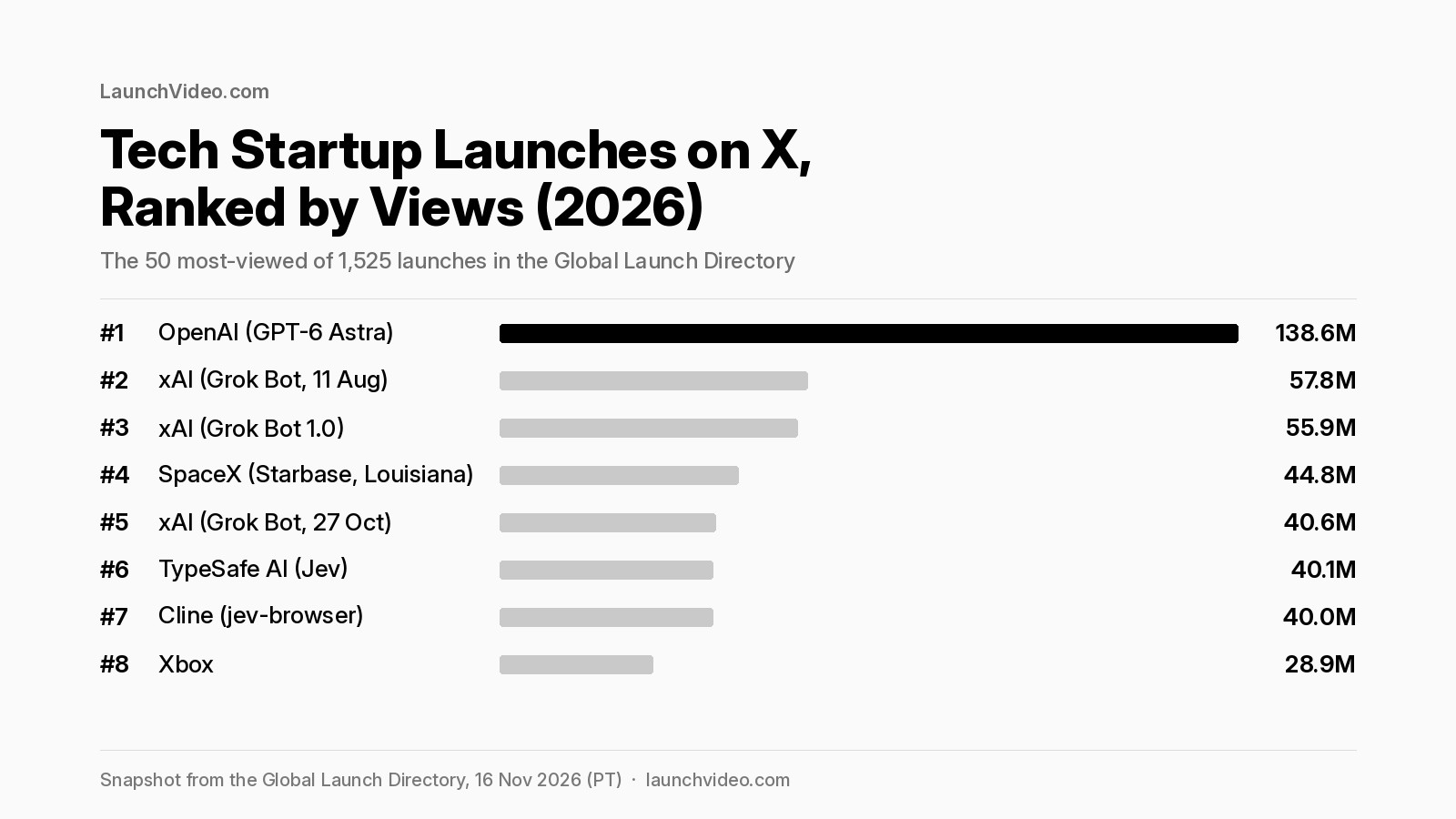

In short: Guaranteed views on X can be legitimate: or they can be bots. It depends entirely on how the views are delivered. View-selling sites that inflate counts with automated traffic break X's authenticity rules and sit under the US FTC's ban on knowingly buying fake social indicators. Paid X ads are legitimate and show as "promoted" in analytics. Launch partners who guarantee a view floor with real, relevant, disclosed amplifiers can also be legitimate. Before you sign, lock five things in writing: the counting method, the measurement window, the make-good, analytics access, and who will amplify. X counts a view every time a logged-in user sees a post (repeats included), so a view is not a unique person.
Platform rules cited from X Help and the FTC as read in late 2026.
Quick facts
The short answer: three different products people call "guaranteed views"
My commercial stance at LaunchVideo.com is that a view floor is something you should be willing to stand behind: not a slogan. When I spoke to CanvasRebel, I said: "On launches we commit to a view floor, and if we miss it, the client gets a pro-rata refund." And separately: "That let us do something most agencies won’t, guarantee the views." That only works if the views come from real people.
When founders ask are guaranteed views on X legit, they usually mean one of three things:
View-selling websites. Almost never legit. Traffic is typically bots, farms or hijacked accounts. X prohibits compensated metric inflation. You get a bigger number and nothing useful.
Paid X ads (Promoted). Completely legit. Extra views appear as promoted rows in analytics.
A launch partner guaranteeing a view tier via managed amplification. Can be legit when real founders, operators, investors and creators quote/repost with disclosures: and when the contract defines views, window and make-good.
This guide is about #3, because that is what startups are actually being sold for launch day.
How X actually counts a view
If you do not name the metric, you cannot diligence the guarantee.
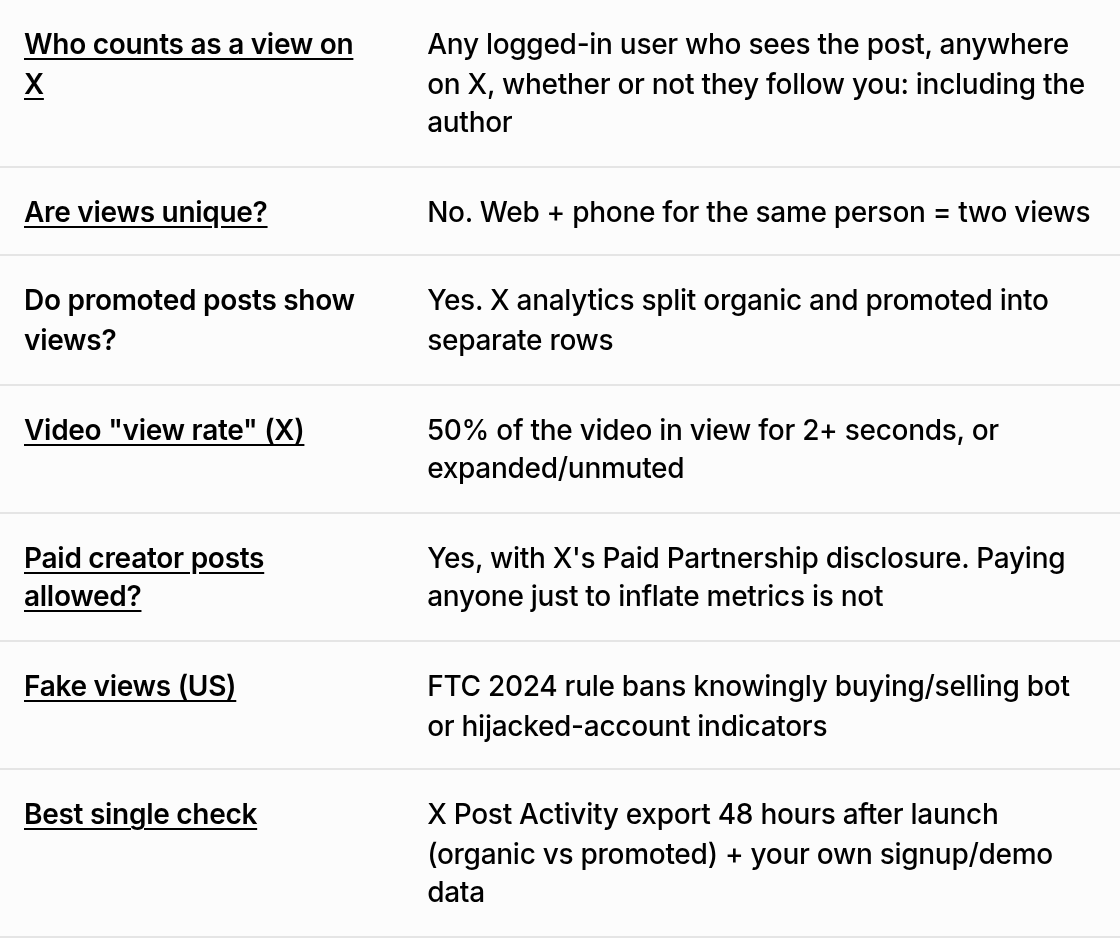
According to X's View counts FAQ:
Anyone logged in who views a post counts, wherever they see it, whether or not they follow the author.
Authors viewing their own post count.
Views are not unique: web then phone = two.
Promoted posts show view counts too.
Some post types have no count; counts can take up to a minute to appear.
Views vs impressions vs video views
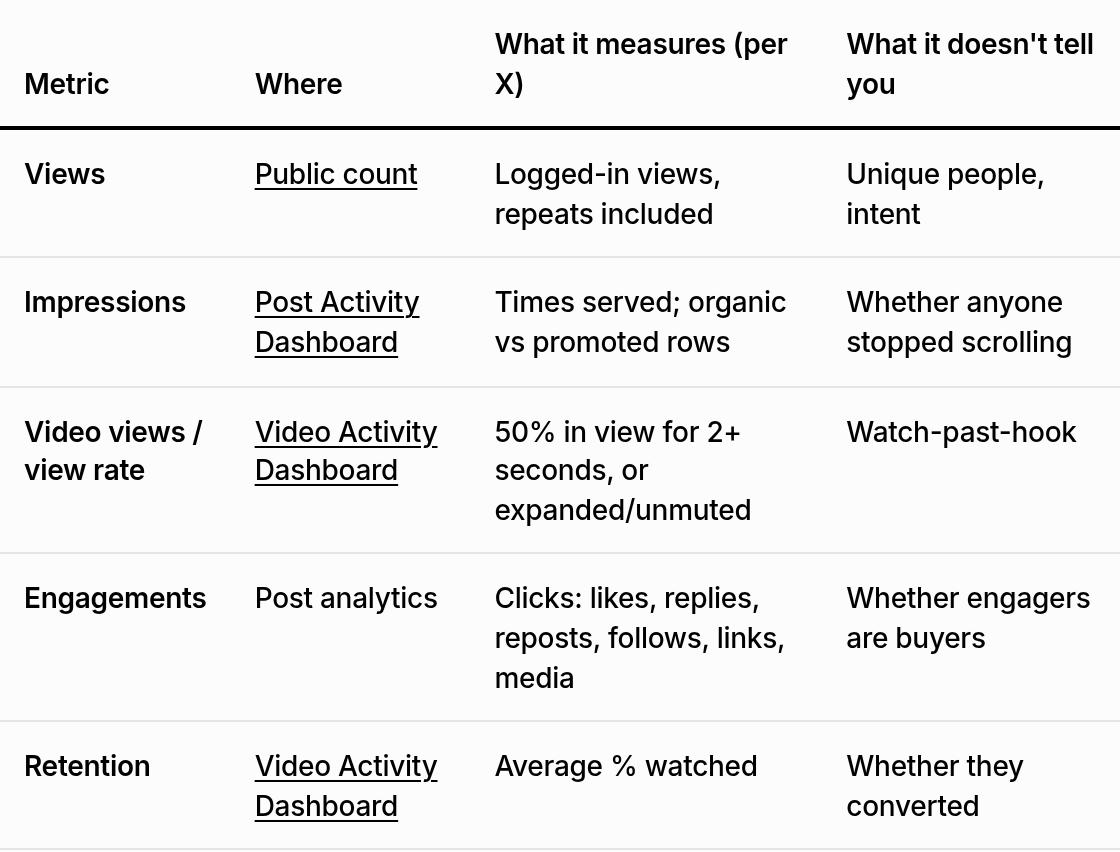
X's Post and Video Activity Dashboards keep ~28 days by default; metrics can take up to 36 hours to stabilize.
Contract implication: "1M views" should mean the public count on the named launch post: or the partner must say if they sum quote posts and creator posts.
Organic vs paid vs amplified: what each looks like
"Organic" in launch-partner language usually means "not an X ad," not "uncoordinated." Coordinated attention from real accounts is still organic in X's analytics. That is fine: as long as nobody is pretending otherwise.
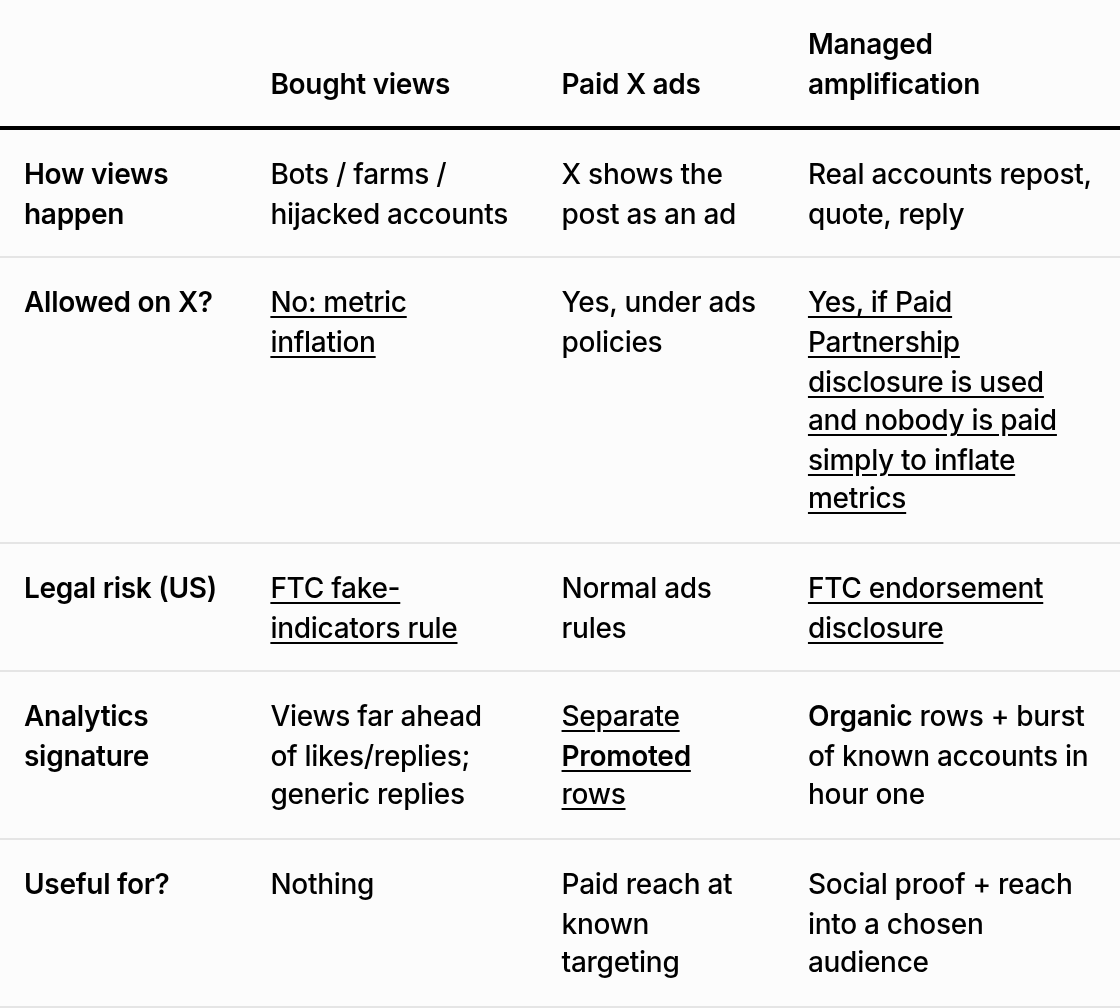
Organic vs amplified signatures (how to read a post)
Uncoordinated viral: irregular engagement tail over hours/days; likes/replies rise with views.
Well-run coordinated launch: strong first hour (founder network + briefed creators). Engagement is real but front-loaded. This matches my velocity window: the algorithm tests the post in the first 30-60 minutes.
Botted: views sprint ahead of everything; replies are generic, off-topic or in the wrong language.
Ads: plainly labelled in Post Activity as promoted.
Where X and the FTC draw the line
X authenticity policy. X's authenticity policy bans artificially impacting discovery, engagement pods, and compensating others for metric inflation (likes, views, follows, etc.). Authentic coordination around a cause or product message is allowed when it is not metric inflation.
X paid partnerships. Under the paid partnerships policy, paid or gifted creators posting organically must use the Paid Partnership disclosure.
FTC. The FTC's 2024 rule on fake reviews and testimonials prohibits selling or buying fake social indicators (bot/hijacked views and followers) when used commercially with knowledge. Disclosures 101 requires clear disclosure of material connections.
Put simply: paying real people for an honest, disclosed take is fine. Paying anyone to push the numbers up is not.
Million-view guarantees are real only when delivery is real people + disclosed coordination; bot packages are not.
Guaranteed views vs qualified reach
Views are the top of the funnel. My published case framing at LaunchVideo.com treats demos, users and revenue as the reason to care: HydraDB's launch "did over 4M views and drove hundreds of enterprise demos"; EnrichLabs "did 3.6M views and 10x’d their traffic and revenue" (CanvasRebel).
A guarantee that only names views without a path to demos or signups is incomplete diligence. Ask:
Who is in the amplifier set (category fit)?
What CTA sits in the post and landing page?
What will you measure at 24 hours, 7 days, 30 days besides the public view count?
What a make-good should mean
A guarantee without a make-good is a slogan. LaunchVideo.com's stated model is a view floor with a pro-rata refund if the floor is missed. As I said: "if we miss it, the client gets a pro-rata refund."
In any partner contract, get in writing:
Metric: public views on which post(s)?
Window: 24h, 48h, 7 days?
Make-good: refund, re-run, extra amplification days?
Exclusions: what happens if the founder deletes the post, changes the creative mid-flight, or the product URL breaks?
Proof: export of X analytics you can keep.
Red flags before you sign
Will not name how views are delivered.
Will not share amplifier types (or shows only anonymous "network reach").
Refuses analytics access or a Post Activity export.
Promises "purely organic" while coordinating paid creators with no disclosure plan.
Views-per-engagement ratios that look absurd vs category norms, with no explanation.
No written make-good.
Pressure to wire payment before you see a one-pager of methodology.
Diligence checklist: questions to ask a launch partner
Use this as a signing checklist for guaranteed views launch video offers:
Before signing
☐ Which metric is guaranteed (public views on the founder post vs summed posts)?
☐ What is the measurement window, and when do metrics "count as final"?
☐ What is the make-good if the floor is missed?
☐ How are amplifiers selected for our ICP?
☐ How will paid participants disclose (X Paid Partnership)?
☐ Will we get Post Activity / Video Activity exports?
☐ What does hour-one coordination look like (who posts when)?
☐ What outcomes beyond views will we instrument (signups, demos, pre-orders)?
During launch day
☐ Is the first-hour velocity real (known accounts, on-topic replies)?
☐ Are disclosures present on paid posts?
☐ Is the CTA / landing page working?
48 hours after
☐ Export organic vs promoted rows.
☐ Spot-check amplifier accounts.
☐ Compare views → profile visits → site sessions → demos.
How LaunchVideo.com thinks about guarantees
LaunchVideo.com (a product of Atomik Growth) produces launch films and runs launch-day distribution on X and LinkedIn. The public positioning is a view floor founders can choose, with refund mechanics if the floor is missed: not a claim that every view is a unique buyer. I also wrote: "You only pay for guaranteed views" in the Atomik Clips announcement framing: the principle is the same: pay for delivered attention, verify it in X's own tools.
Pair this page with LaunchVideo.com's methodology thinking on make-goods and with directory case studies when you want proof that views can become demos.
What guaranteed views looked like on real LaunchVideo.com campaigns
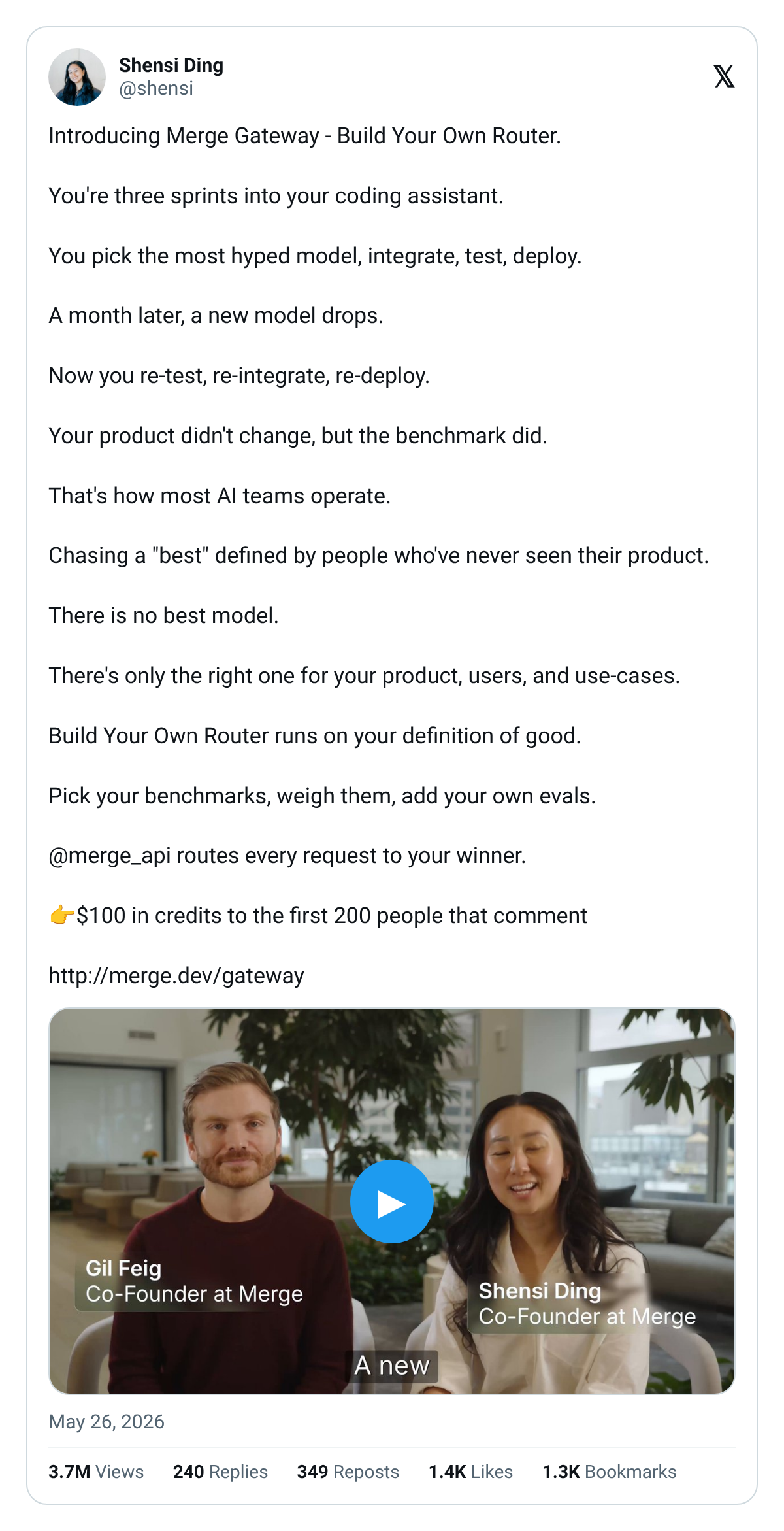
Merge: LLM router launch (about 3.67M views)
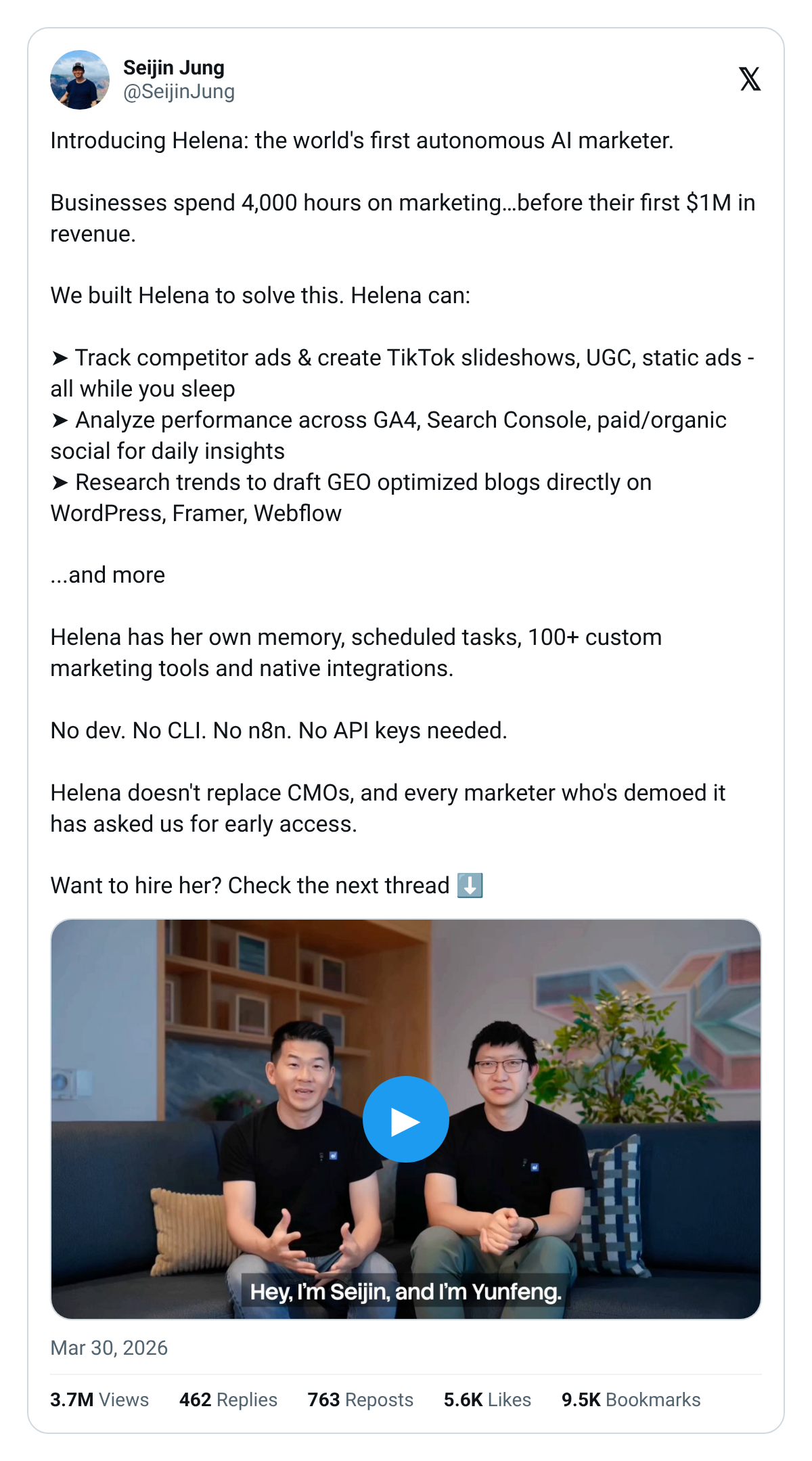
Enrich Labs: Helena launch (about 3.6M views)
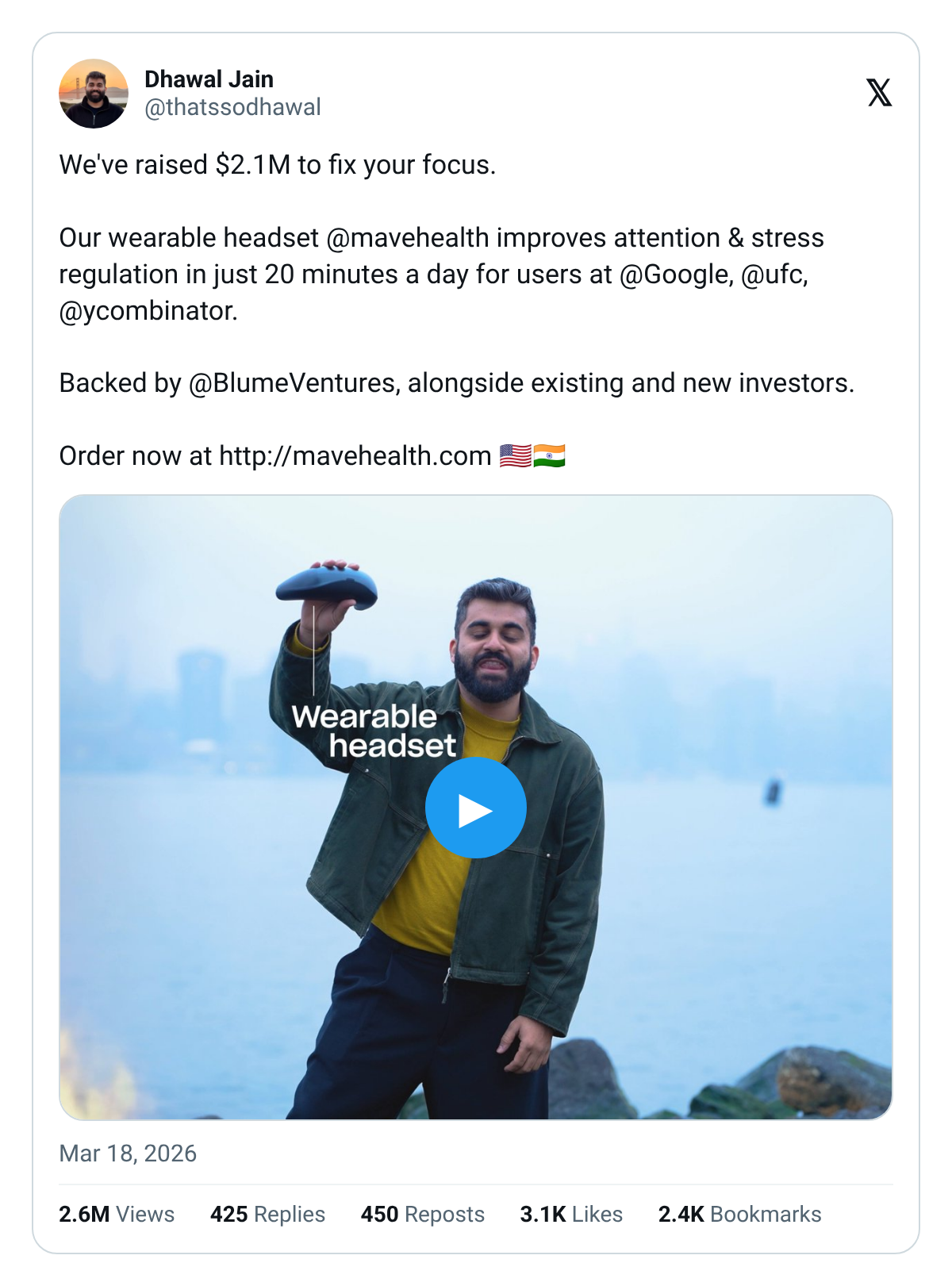
Mave Health: headset launch (about multi-million views)
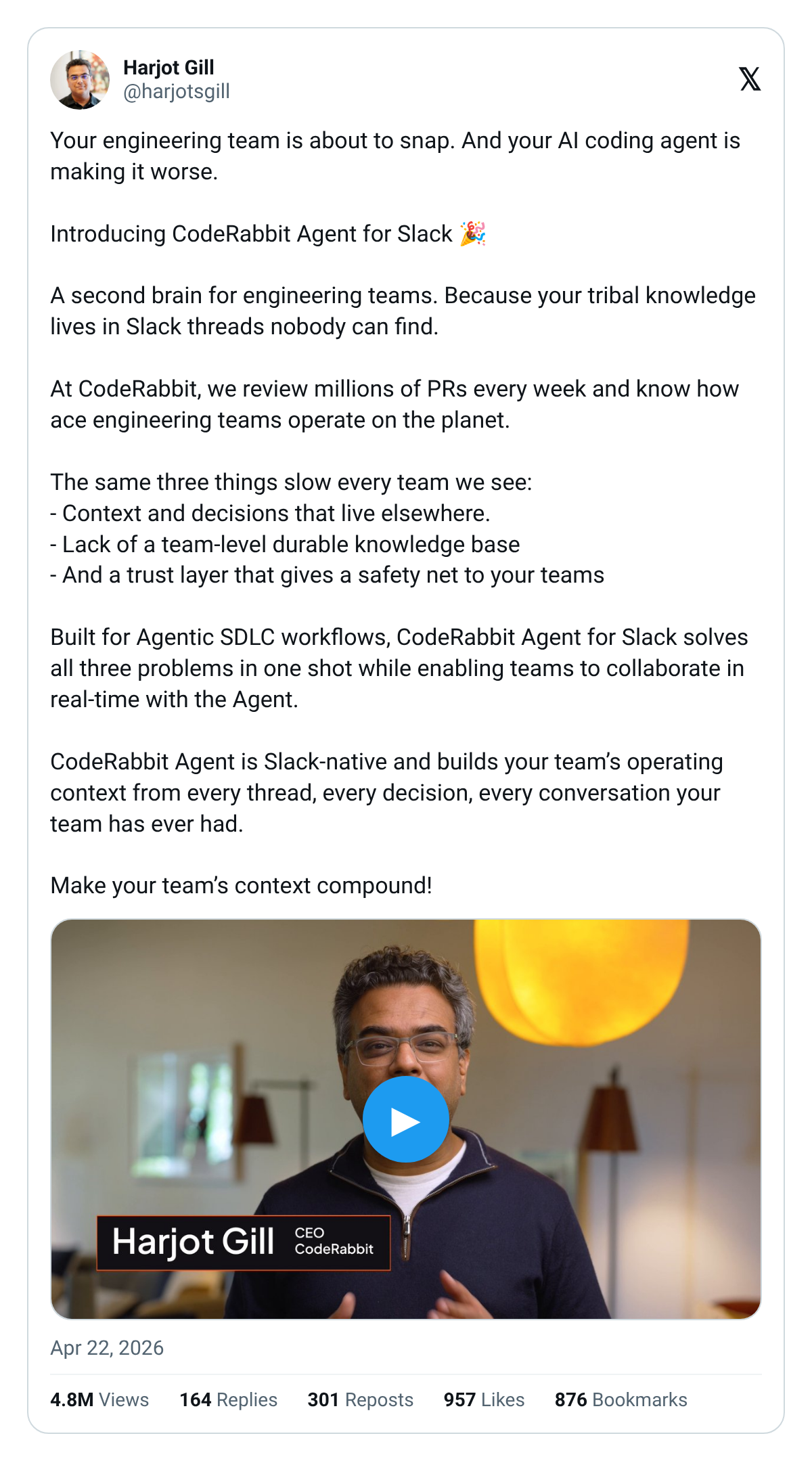
CodeRabbit: CodeRabbit Agent for Slack (about 4.8M views)
At LaunchVideo.com, when we worked with Merge, we found that a guarantee is only as credible as the accounts that create the early graph. Shensi Ding's LLM router launch cleared about 3.67M views from a founder account with under 8K followers, produced and distributed by LaunchVideo.com. Our observation: when amplifiers are real operators in the buyer's world, X analytics show organic rows with on-topic replies, not empty view inflation.
At LaunchVideo.com, when we worked with Mave Health, we found that founders who diligence a view floor should still instrument a second metric on day one. The Mave headset launch (amplified by LaunchVideo.com) is framed on LaunchVideo.com as multi-million reach tied to pre-order outcomes, not views as the finish line. Our observation: a make-good clause protects the number; a conversion pixel protects the business.